
From August to September, AWOL Tours offers hiking, cycling and photography trips up the West Coast of South Africa into Namaqualand. At any other time of the year this region is a desert scape but after the winter rainfalls a miracle occurs and the landscape is transformed into a floral wonderland.
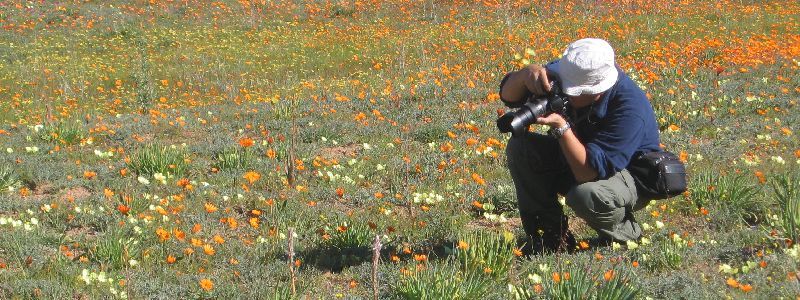 From August to September, AWOL Tours offers hiking, cycling and photography trips up the West Coast of South Africa into Namaqualand. At any other time of the year this region is a desert scape but after the winter rainfalls a miracle occurs and the landscape is transformed into a floral wonderland.
From August to September, AWOL Tours offers hiking, cycling and photography trips up the West Coast of South Africa into Namaqualand. At any other time of the year this region is a desert scape but after the winter rainfalls a miracle occurs and the landscape is transformed into a floral wonderland.
From August to September, AWOL Tours offers hiking, cycling and photography trips up the West Coast of South Africa into Namaqualand. At any other time of the year this region is a desert scape but after the winter rainfalls a miracle occurs and the landscape is transformed into a floral wonderland.


From August to September, AWOL Tours offers hiking, cycling and photography trips up the West Coast of South Africa into Namaqualand. At any other time of the year this region is a desert scape but after the winter rainfalls a miracle occurs and the landscape is transformed into a floral wonderland.
From August to September, AWOL Tours offers hiking, cycling and photography trips up the West Coast of South Africa into Namaqualand. At any other time of the year this region is a desert scape but after the winter rainfalls a miracle occurs and the landscape is transformed into a floral wonderland.
Namaqualand is a semi-desert environment packed into an area of around 50,000 km. However in the springtime if sufficient rains soak into the thirsty earth, then millions upon millions of flowers emerge in an explosion of colour, transforming the landscape into a wonderland of beauty. There are about 3000 different species and more than 75 different families, so it’s almost impossible to identify them all but we get to show you the most interesting and beautiful flowers of the region.
Each plant group has developed its own unique means of survival and pollination method. Annuals avoid the dry periods by germinating quickly, then growing, flowering and setting seed during the moist winter and spring. They then die off and survive the hot summer and autumn in the form of seed. My favourite is the Beetle Daisy (Asteraceae Gorteria diffusa) in the ASTERACEAE family, because it has a beetle pattern that attracts beetle pollinators, who are tricked into thinking they are potential mates.
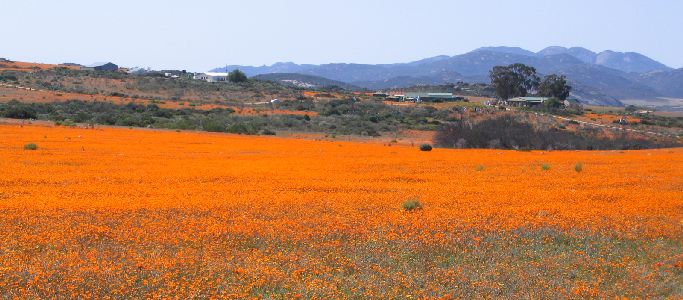
Perennials such as the geophytes survive the summer underground in the form of bulbs, corms and tubers. Bulbs, such as in the IRIDACEAE family, make up 500 different species. The Spinnekopblom / Spider flower (Ferraria ovata) has a very bad smell – a bit like rotting meat – which it uses to attract the flies that pollinate it.
Lastly, the Succulents and Aloes make up one third of the plants in the region (and 10% of succulents worldwide). Look out for the cutest of them all – Bababoudjies / Baby bums (Argyroderma delaetii). These stone plants grow sunken in the ground to preserve moisture.
Depending on the rains, various different types of flowers bloom. If you interested in seeing fields of different daisies its best to go early in August. The bulbs and succulents start blooming towards the end of August. Following are some tips and advice on how to get the best experience in this floral wonderland:
- As the flowers face the sun, a good general principle is to travel north relatively quickly and then do most of your flower-viewing in a southerly direction so that the flowers are always facing you.
- The flowers are at their best between 11:00am and 16:00pm in the afternoon so there is no need to rush out straight after breakfast, (unless you have some travelling to do before you get to the flower region).
- The flowers will not come out in heavily overcast or rainy weather so you should plan to visit other sights on such days. Keep this fact in mind when planning your trip.
- The displays are noticeably better if you travel with the sun behind you so that the flowers are facing you. So when planning your daily route, try to travel in a westerly direction in the morning, southerly during the day and turn east in the afternoon.
- Get out of your car and walk amongst the flowers – you will appreciate them so much more! But do step carefully so as not to damage the delicate flowers.
Take a good flower book, or better still book an AWOL Tour! Our field guides are passionate about flowers and their quirky adaptations to pollination and survival in the beautiful and harsh climate.
Namaqualand is a semi-desert environment packed into an area of around 50,000 km. However in the springtime if sufficient rains soak into the thirsty earth, then millions upon millions of flowers emerge in an explosion of colour, transforming the landscape into a wonderland of beauty. There are about 3000 different species and more than 75 different families, so it’s almost impossible to identify them all but we get to show you the most interesting and beautiful flowers of the region.
Each plant group has developed its own unique means of survival and pollination method. Annuals avoid the dry periods by germinating quickly, then growing, flowering and setting seed during the moist winter and spring. They then die off and survive the hot summer and autumn in the form of seed. My favourite is the Beetle Daisy (Asteraceae Gorteria diffusa) in the ASTERACEAE family, because it has a beetle pattern that attracts beetle pollinators, who are tricked into thinking they are potential mates.
Perennials such as the geophytes survive the summer underground in the form of bulbs, corms and tubers. Bulbs, such as in the IRIDACEAE family, make up 500 different species. The Spinnekopblom / Spider flower (Ferraria ovata) has a very bad smell – a bit like rotting meat – which it uses to attract the flies that pollinate it.
Lastly, the Succulents and Aloes make up one third of the plants in the region (and 10% of succulents worldwide). Look out for the cutest of them all – Bababoudjies / Baby bums (Argyroderma delaetii). These stone plants grow sunken in the ground to preserve moisture.
Depending on the rains, various different types of flowers bloom. If you interested in seeing fields of different daisies its best to go early in August. The bulbs and succulents start blooming towards the end of August. Following are some tips and advice on how to get the best experience in this floral wonderland:
- As the flowers face the sun, a good general principle is to travel north relatively quickly and then do most of your flower-viewing in a southerly direction so that the flowers are always facing you.
- The flowers are at their best between 11:00am and 16:00pm in the afternoon so there is no need to rush out straight after breakfast, (unless you have some travelling to do before you get to the flower region).
- The flowers will not come out in heavily overcast or rainy weather so you should plan to visit other sights on such days. Keep this fact in mind when planning your trip.
- The displays are noticeably better if you travel with the sun behind you so that the flowers are facing you. So when planning your daily route, try to travel in a westerly direction in the morning, southerly during the day and turn east in the afternoon.
- Get out of your car and walk amongst the flowers – you will appreciate them so much more! But do step carefully so as not to damage the delicate flowers.
Take a good flower book, or better still book an AWOL Tour! Our field guides are passionate about flowers and their quirky adaptations to pollination and survival in the beautiful and harsh climate.
Namaqualand is a semi-desert environment packed into an area of around 50,000 km. However in the springtime if sufficient rains soak into the thirsty earth, then millions upon millions of flowers emerge in an explosion of colour, transforming the landscape into a wonderland of beauty. There are about 3000 different species and more than 75 different families, so it’s almost impossible to identify them all but we get to show you the most interesting and beautiful flowers of the region.
Each plant group has developed its own unique means of survival and pollination method. Annuals avoid the dry periods by germinating quickly, then growing, flowering and setting seed during the moist winter and spring. They then die off and survive the hot summer and autumn in the form of seed. My favourite is the Beetle Daisy (Asteraceae Gorteria diffusa) in the ASTERACEAE family, because it has a beetle pattern that attracts beetle pollinators, who are tricked into thinking they are potential mates.
Perennials such as the geophytes survive the summer underground in the form of bulbs, corms and tubers. Bulbs, such as in the IRIDACEAE family, make up 500 different species. The Spinnekopblom / Spider flower (Ferraria ovata) has a very bad smell – a bit like rotting meat – which it uses to attract the flies that pollinate it.
Lastly, the Succulents and Aloes make up one third of the plants in the region (and 10% of succulents worldwide). Look out for the cutest of them all – Bababoudjies / Baby bums (Argyroderma delaetii). These stone plants grow sunken in the ground to preserve moisture.
Depending on the rains, various different types of flowers bloom. If you interested in seeing fields of different daisies its best to go early in August. The bulbs and succulents start blooming towards the end of August. Following are some tips and advice on how to get the best experience in this floral wonderland:
- As the flowers face the sun, a good general principle is to travel north relatively quickly and then do most of your flower-viewing in a southerly direction so that the flowers are always facing you.
- The flowers are at their best between 11:00am and 16:00pm in the afternoon so there is no need to rush out straight after breakfast, (unless you have some travelling to do before you get to the flower region).
- The flowers will not come out in heavily overcast or rainy weather so you should plan to visit other sights on such days. Keep this fact in mind when planning your trip.
- The displays are noticeably better if you travel with the sun behind you so that the flowers are facing you. So when planning your daily route, try to travel in a westerly direction in the morning, southerly during the day and turn east in the afternoon.
- Get out of your car and walk amongst the flowers – you will appreciate them so much more! But do step carefully so as not to damage the delicate flowers.
Take a good flower book, or better still book an AWOL Tour! Our field guides are passionate about flowers and their quirky adaptations to pollination and survival in the beautiful and harsh climate.
 We're on WhatsApp!
Leave A Comment