
A Brief Guide to the Wildlife and Ecosystems of Cape Town’s Most Iconic Landmark
Most visitors head to Table Mountain for the views, and it’s easy to see why. But beyond the dramatic cliffs and panoramic cable car rides, this UNESCO World Heritage Site is alive with unique wildlife, rare plants, and ecosystems found nowhere else on Earth.
In this guide, we’ll explore the animals and plants you might encounter on Table Mountain, from rare frogs and rock hyraxes to proteas and sugarbirds, and why it’s one of the most important biodiversity hotspots in South Africa.
1. What animals live on Table Mountain?
The Table Mountain Ghost Frog
Only found in a few clear, fast-moving streams, the Table Mountain ghost frog (Heleophryne rosei) is one of the most endangered amphibians in South Africa. Its entire habitat spans just 8–10 square kilometres, making it incredibly vulnerable to changes in water quality and flow. Its tadpoles take over a year to develop, which is part of what makes this species so rare and fascinating.
The Rock Hyrax (Dassie)
The rock hyrax, or dassie, is one of the most commonly spotted animals on Table Mountain. Often seen lounging near the cable car station or darting between boulders, dassies are small, furry mammals that resemble guinea pigs — but remarkably, their closest living relative is the elephant.
Birdlife on Table Mountain
Table Mountain is a birdwatcher’s dream. Visitors might spot the striking Verreaux’s eagle soaring overhead, or the vibrant Cape sugarbird feeding on nectar from flowering proteas. Other local species include sunbirds, kestrels, and the rare orange-breasted sunbird.
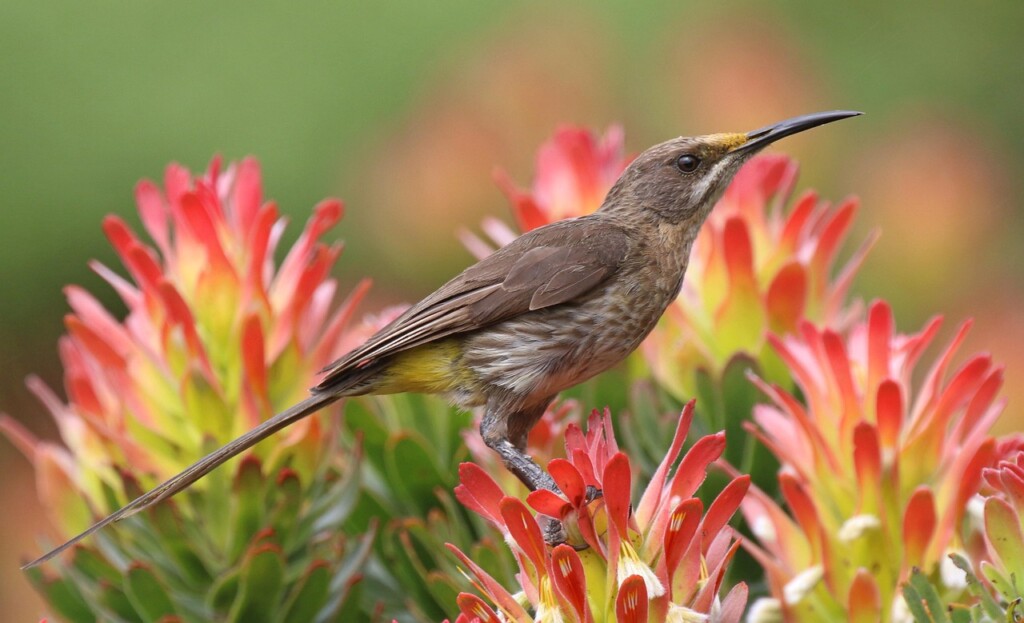
The Cape Sugarbird
2. What plants grow on Table Mountain?
Fynbos Flora and the Cape Floral Kingdom
Table Mountain forms part of the Cape Floral Kingdom, the smallest but richest floral kingdom in the world. The mountain is blanketed in fynbos, a unique type of vegetation that includes over 2,000 plant species, many of which are endemic.
King Protea and Silver Trees
Among the most iconic plants are the king protea, South Africa’s national flower, and the silver tree, a rare, shimmering species that only grows on the mountain’s slopes. Many fynbos species bloom seasonally, making every visit unique.
3. Why Table Mountain is a biodiversity hotspot
With more plant species than the entire United Kingdom and dozens of endemic animal species, Table Mountain is considered one of the world’s most biodiverse areas relative to its size. Its range of habitats, from forested gorges to rocky outcrops, supports species that have adapted to thrive in these harsh but beautiful conditions.
4. Can I see wildlife on Table Mountain with a guide?
Yes. AWOL Tours offers expert-guided hikes and walks on Table Mountain, designed to help you spot wildlife, learn about the mountain’s ecosystems, and discover hidden corners not found in guidebooks. Whether you’re a nature lover, a photographer, or just curious about the world around you, hiking with a local guide can turn a scenic walk into a memorable, meaningful experience.
5. When is the best time to visit Table Mountain?
The Table Mountain Aerial Cableway reopens on 3 August 2025 after annual maintenance. Spring (August to October) is a particularly rewarding time to visit, with clear skies, blooming fynbos, and active birdlife. Guided hikes are available year-round and can be tailored to your fitness level and interests.

Explore the Wildlife of Table Mountain with AWOL Tours
Whether you’re hiking to Maclear’s Beacon or taking the cableway to the top, take a moment to look beyond the view. Table Mountain is more than a scenic backdrop, it’s a living, breathing ecosystem that deserves to be explored and protected.
 We're on WhatsApp!
Leave A Comment